
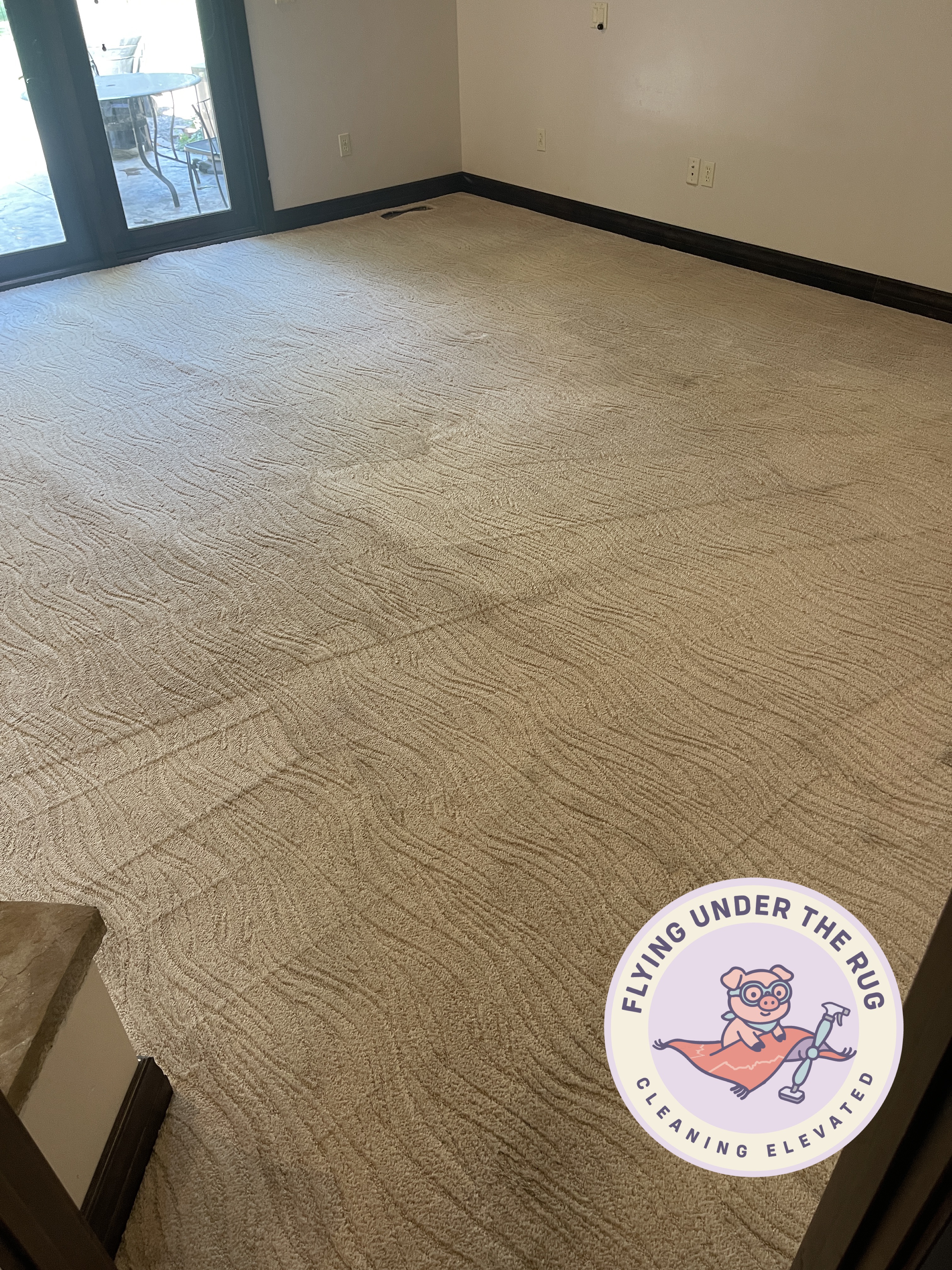
As we move into the winter months, “Why is my carpet bubbling?”, “Why do I have ripples in my carpet?”, and “Why do I have wrinkles in my carpet?” are questions we are going to get asked often. It’s pretty disconcerting to have your carpets professionally cleaned, to now have large lumps showing up all over the place!


While I wouldn’t call this usual, it is normal. This is a condition called differential expansion. Traditional, tufted carpet is made in layers, with the top layer being the face yarns or pile of the carpet. The next layer is called the primary backing, in which the face yarns are stitched into. The face yarns are held in place by a layer of latex glue, which also attaches the secondary backing.

Differential expansion occurs in the latex glue that holds the carpet together. This glue is often mixed with a filling agent, often made of clay or marble dust. The filling agent helps to make the carpet more rigid and helps the glue go farther. Unfortunately, it is also hygroscopic, meaning it absorbs water easily. When they clay gets wet and absorbs the water, it expands, and the only direction it is able to go is laterally. This movement pushes the carpet backing towards the edges, but as the edges are held in place by the tackless (tack) strip, the carpet has no where to go but up. This creates the ripples or bubbles that are so concerning to homeowners and carpet cleaners. The higher the clay content of the glue, the more pronounced the bubbles will be.
The Good News
The good news is the carpet will return to its normal appearance when the clay has fully dried out, usually within 24-48 hours of the cleaning. Absorbent fibers, such as wool and nylon, will show differential expansion more and longer than polyester, triexta, or polypropylene (olefin).
It is important to stay off the carpet as much as possible until it has fully dried and relaxed back into its position. Latex weakens when it is wet, but will actually dry stronger. But stay off of those ripples until they’re gone, to reduce the risk of delamination, or the separation of the primary and secondary backings.
Loop pile carpet may also take longer to dry, and be susceptible to differential expansion.
I’ve had my carpet cleaned before and this hasn’t happened!
That is a fair point- why is it happening now but not in the past? Environmental factors such as relative humidity, air flow, and ventilation play a large part in the speed carpet can dry. Maybe today was a little more humid than in the past. Maybe the windows aren’t open this time. There are lots of reasons that could be. Maybe the technician had to work harder to get the dirt out this time, and the carpets got a little wetter. That is a good case for fiber protector there- as carpet ages, protectors should be re-applied in order to keep the carpet performing its best.
Whatever the reason, it happened this time, and the solution is the same- let it dry!
Other reasons carpet may develop wrinkles, ripples, bubbles, or waves
- Improper Installation- Per manufacturer guidelines, carpets need to be power stretched into place, and then “tacked down.” The installer must use a knee kicker, which helps position the carpet on the tack(less) strip. This strip will hold the carpet in place. If the carpet is not properly stretched in, it will go back to its original, un-stretched state. As you might imagine, this creates uneven wrinkling in the carpet. Some areas of the carpet will be attached to the tack strip, while others aren’t. The part that is often skipped during carpet installation is the power stretching. It takes time to do it right, and the equipment is awkward and takes practice. But it is essential to a proper install. This is what carpet repair technicians will do when they stretch or re-stretch carpet.
- Old and Worn Carpets-The age of the carpet also plays into this condition- if the backings are starting to fail, or if the glue is starting to break down, the stability of the carpet is decreased, and the carpet will start to buckle. This can also be a factor in the delamination of the carpet, where the primary and secondary backings become separated. One of the most frequent causes of delamination we find? Office chairs with wheels. Putting a rug underneath the wheels of your chair can help eliminate this problem. Improper use of solvent spot removers (acetone, nail polish remover), or over-saturation (like pet urine) of the carpet can also cause delamination.
- Season of Installation– We tend to see wrinkles appear in carpets that were laid over the winter the most. Carpet rolls go from a cold warehouse to a cold truck, to be cut on a cold driveway. It is then promptly brought into the house and stretched into place. During the warmer months, this is not a problem, but in the winter, when it is cold outside, the carpet backing will be very stiff and hard to stretch into place. As the weather warms up, the carpet backing will relax more, and voila! Bubbles start to appear on the carpet. This is why carpet cleaning temperature matters. Ideally, carpet laid in the cooler months should remain in the house for several days prior to installation. This allows it to acclimate to the ambient temperature.
- Defective Carpet- One last possible cause of carpet wrinkling, though the most unlikely, is a manufacturer defect. If the glue was not mixed, spread, or cured properly, wrinkles can occur. If your carpet has been properly maintained, this could be covered under your manufacturer’s warranty. Refer to your specific manufacturer for more information.
Again, carpet ripples are not common, but they are normal, especially after hot water extraction cleaning. Drying the carpet out by increasing airflow, ventilation and decreasing humidity is the best way to correct the problem. You should start to see improvement within a few hours of cleaning, and they should be completely gone within 24-48 hours of cleaning. If they persist, consult your carpet cleaning professional.
Leave a Reply